Sunday, November 8, 2009

Teams and capturing the significance of teams

Within and around teams - History has brought us to a moment where teams are recognised as a critical component of every enterprise - the predominent unit for decision making and getting things done. Nonetheless, most aspects of existing infrastructure - such as measurement and compensation systems, as well as rewards - have not yet "captured" the significance of teams. And many people who espouse the importance of teams still believe, when push comes to the shove, that the key unit of effectiveness is individual. This will inevitably change.


The prevailing definition of "team" will change as well.


From The Fifth Discipline Filedbook, Team Learning

Teams: the word "team" can be traced back to the Indo-European word deuk (to pull); it has always included a meaning of "pulling together". (The modern sense of team, "a group of people acting together" emerged in the sixteenth century.)
We define "teams" as any group of people who need each other to accomplish a result. This definition is derived from a statement made by former Royal Dutch / Shell Group Planning coordinator Arie de Geus: "The only relevant learning in a company is the learning done by those people who have the power to take action" - Art Kleiner, From The Fifth Discipline Fieldbook, Team Learning
Photo of Arie de Geus

Friday, November 6, 2009

Can astrology/numerology (not the predictive aspect but the self awareness aspect) help us discover our gifts?


Two recommended books about astrology (quoting Kiran Guljarani - see facebook link below)

"2 amazing pieces of work I have found are:
1. Dan Millman's 'Life u were born to live' (same guy who wrote - the way of the peaceful warrior - also a great movie)
2. Astrology for the Soul - Jan spiller - "

Astrology for the Soul by Jan Spiller, proved to me to be a book of exception... Simply and without pretence, it did open the door to a very deep and authentic reading of myself. Somehow but coming from a different approach it offers as powerful an understanding as Jung theory of archetypes and how it was then practically turned into a self-discovery tool by MBTI.Jan Spiller cut through the academism and offer plain wisdom-reading about the stuff we are made of. The stuff we are made of... I like that...not who we are - we are what we become - but what has been shaping our Self, our inner-structure... Moons, stars, Sun...and the inter-relation of these... these phenomenoms have been and are the pillars of what we know, what we do and what we create... science is based upon their observation... Pythagore, Ptolemee, Newton are considered great astrologists... but as the separation grew between science of matters and objects and science about people, science in the Western sense became exclusively focused on things rather than people and behaviours. Astronomy was real science and astrology was not anymore... I guess we are living in a world where we are re-learning who we are, re-learning the deep connection between people and things, subject and object... People like Jan Spiller show that despite the gutter into which much of astrology has fallen, there is an ancient-wisdom-based-science-driven astrology which still belongs to the nobility of man.

This was in comment of a question asked by Kiran: can astrology/numerology (not the predictive aspect but the self awareness aspect) help us discover our gifts? ..


Monday, November 2, 2009

Build organizations around what works, rather than trying to fix what doesn't

Appreciative inquiry - Beyond Problem-solving

This is what I feel is a new, powerful framework to get people working WELL together, not just working or working together...Why could things not flow? What if man was actually what can either obstruct or let go...?

From Wikipedia, the free encyclopedia

Appreciative Inquiry (AI) is an organizational development process or philosophy that engages individuals within an organizational system in its renewal, change and focused performance. AI is based on the assumption that organizations change in the way they inquire and the claim that an organization which inquires into problems or difficult situations will keep finding more of the same but an organization which tries to appreciate what is best in itself will find/discover more and more of what is good.

Appreciative Inquiry was adopted from work done by earlier action research theorists and practitioners and further developed by David Cooperrider of Case Western Reserve University and Suresh Srivatsva in the 1980s. Cooperrider and Srivatsva say that an organization is a miracle to be embraced rather than a problem to be solved. According to them, inquiry into organizational life should have the following characteristics:

  1. Appreciative
  2. Applicable
  3. Provocative
  4. Collaborative
It is now a commonly accepted practice in the evaluation of organizational development strategy and implementation of organizational effectiveness tactics.

Appreciative Inquiry is a particular way of asking questions and envisioning the future that fosters positive relationships and builds on the basic goodness in a person, a situation, or an organization. In so doing, it enhances a system's capacity for collaboration and change. Appreciative Inquiry utilizes a cycle of 4 processes focusing on:
  1. DISCOVER: The identification of organizational processes that work well.
  2. DREAM: The envisioning of processes that would work well in the future.
  3. DESIGN: Planning and prioritizing processes that would work well.
  4. DESTINY (or DELIVER): The implementation (execution) of the proposed design.
The basic idea is to build organizations around what works, rather than trying to fix what doesn't. It is the opposite of problem solving. Instead of focusing on gaps and inadequacies to find blame and remediate skills or practices, AI focuses on how to create more of the occasional exceptional performance that is occurring because a core of strengths is aligned. The approach acknowledges the contribution of individuals, in order to increase trust and organizational alignment. The method aims to create meaning by drawing from stories of concrete successes and lends itself to cross-industrial social activities. It can be enjoyable and natural to many managers, who are often sociable people.

There are a variety of approaches to implementing Appreciative Inquiry, including mass-mobilized interviews and a large, diverse gathering called an Appreciative Inquiry Summit (Ludema, Whitney, Mohr and Griffin, 2003). Both approaches involve bringing very large, diverse groups of people together to study and build upon the best in an organization or community.

The basic philosophy of AI is also found in other positively oriented approaches to individual change as well as organizational change. As noted above, " AI ...fosters positive relationships and builds on the basic goodness in a person, or a situation ...." The idea of building on strength, rather than just focusing on faults and weakness is a powerful idea in use in mentoring programs, and excellent performance evaluations. It is the basic idea behind teaching "micro-affirmations" as well as teaching about micro-inequities. (See Microinequity Rowe Micro-Affirmations and Micro-inequities in the Journal of the International Ombudsman Association, Volume 1, Number 1, March 2008.)

AI has been used extensively to foster change in businesses (a variety of sectors), health care systems, social profit organizations, educational institutions, communities, local governments, and religious institutions.

from: http://en.wikipedia.org/wiki/Appreciative_inquiry
The summary of which reads: The position that is developed can be summarized as follows: 
1- For action-research to reach its potential as a vehicle for social innovation it needs to begin advancing theoretical knowledge of consequence; 
2- that good theory may be one of the best means human beings have for affecting change in a postindustrial world; 
3- that the discipline's steadfast commitment to a problem-solving view of the world acts as a primary constraint on its imagination and contribution to knowledge; 
4- that appreciative inquiry represents a viable complement to conventional forms of action-research; and finally, 
5- that through our assumptions and choice of method we largely create the world we later discover.
Wednesday, October 28, 2009

The 4 practical steps to enact the laws of attractions... and background info on quantum mechanics

Wiki Overview of the Law of Attraction and 4 practical steps to make it happen
The Law of Attraction claims to have roots in Quantum Physics. According to proponents of this law, thoughts have an energy which attracts whatever it is the person is thinking of. In order to control this energy to one's advantage, proponents state that people must practice four things:

  1. Know exactly what you want. 
  2. Ask the universe for it. 
  3. Feel, behave and know as if the object of your desire is already yours (visualize). 
  4. Be open to receive it and let go of (the attachment to) the outcome. 
Thinking of what one does not have, they say, manifests itself in not having, while if one abides by these principles, and avoids "negative" thoughts, the universe will manifest a person's desires.

See Quantum mind/body problem#Consciousness Causes Collapse - as quoted below:

Quantum mind/body problem
From Wikipedia, the free encyclopedia

The quantum mind/body problem refers to the philosophical discussions of the mind/body problem in the context of quantum mechanics. Since quantum mechanics involves quantum superpositions, which are not perceived by observers, quantum mechanics apparently places observers in a special position.

The founders of quantum mechanics debated the role of the observer, and of them, Pauli and Heisenberg believed that it was the observer that produced collapse. This point of view, which was never fully endorsed by Bohr, was denounced as mystical and anti-scientific by Einstein. Pauli accepted the term, and described quantum mechanics as lucid mysticism.[1]

Unlike Heisenberg and Bohr, who always described quantum mechanics in logical positivist terms, Hugh Everett took the wavefunction of quantum mechanics as a real description of the world. In the many-worlds interpretation, the memories of the observer splits at every measurement, leading to the subjective appearance of collapse.

This observation was separated from many-worlds interpretation by Wigner, who proposed that the consciousness of the observer is what causes collapse of the wavefunction, independent of any realist philosophy or splitting observers. Colloquially known as "consciousness causes collapse", this interpretation of quantum mechanics states that observation by a conscious observer is what makes the wave function collapse.

The interpretation identifies the non-linear probabilistic projection transformation which occurs during measurement with the selection of a definite state by a mind from the different possibilities which it could have in a quantum mechanical superposition.

Tuesday, October 27, 2009

PRINCIPLES OF WAR at a glance

Thinking about strategies and utilisation of resources, the data below will be useful to create a referential.
What I will recall: concentration of force, economy of force, flexibility of maneuver, surprise...

We should think about the leading western figure in the field of war thinking: Carl Philipp Gottlieb von Clausewitz, 1780-1831

quoting from some western military web (see the reference below)

Taken from this website: http://www.au.af.mil/au/awc/awcgate/prinwar.htm


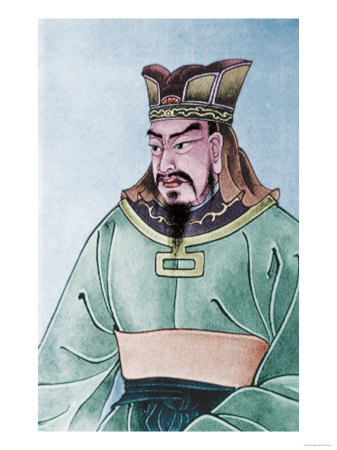
Cultivating victory and Tactical dispositions - SUN TZU ON THE ART OF WAR


To summarise what I just read (below), this is what I am getting:
What makes us win? Patience - What makes us lose? Useless moves, fighting and attacking without clear control. Now here is the translated text (web reference below):
IV. TACTICAL DISPOSITIONS


 1. Sun Tzu said:  The good fighters of old first put
    themselves beyond the possibility of defeat, and then
    waited for an opportunity of defeating the enemy.

 2. To secure ourselves against defeat lies in our
    own hands, but the opportunity of defeating the enemy
    is provided by the enemy himself.
 3. Thus the good fighter is able to secure himself against defeat,
    but cannot make certain of defeating the enemy.

 4. Hence the saying:  One may know how to conquer
    without being able to do it.

 5. Security against defeat implies defensive tactics;
    ability to defeat the enemy means taking the offensive.

 6. Standing on the defensive indicates insufficient
    strength; attacking, a superabundance of strength.

 7. The general who is skilled in defense hides in the
    most secret recesses of the earth; he who is skilled in
    attack flashes forth from the topmost heights of heaven. 
    Thus on the one hand we have ability to protect ourselves;
    on the other, a victory that is complete.

 8. To see victory only when it is within the ken
    of the common herd is not the acme of excellence.

 9. Neither is it the acme of excellence if you fight
    and conquer and the whole Empire says, "Well done!"

10. To lift an autumn hair is no sign of great strength;
    to see the sun and moon is no sign of sharp sight;
    to hear the noise of thunder is no sign of a quick ear.

11. What the ancients called a clever fighter is
    one who not only wins, but excels in winning with ease.

12. Hence his victories bring him neither reputation
    for wisdom nor credit for courage.

13. He wins his battles by making no mistakes. 
    Making no mistakes is what establishes the certainty
    of victory, for it means conquering an enemy that is
    already defeated.

14. Hence the skillful fighter puts himself into
    a position which makes defeat impossible, and does
    not miss the moment for defeating the enemy.

15. Thus it is that in war the victorious strategist
    only seeks battle after the victory has been won,
    whereas he who is destined to defeat first fights
    and afterwards looks for victory.

16. The consummate leader cultivates the moral law,
    and strictly adheres to method and discipline; thus it is
    in his power to control success.

17. In respect of military method, we have,
    firstly, Measurement; secondly, Estimation of quantity;
    thirdly, Calculation; fourthly, Balancing of chances;
    fifthly, Victory.

18. Measurement owes its existence to Earth;
    Estimation of quantity to Measurement; Calculation to
    Estimation of quantity; Balancing of chances to Calculation;
    and Victory to Balancing of chances.

19. A victorious army opposed to a routed one, is as
    a pound's weight placed in the scale against a single grain.

20. The onrush of a conquering force is like the bursting
    of pent-up waters into a chasm a thousand fathoms deep.

[To Chinese text |To Top]

SUN TZU ON THE ART OF WAR  THE OLDEST MILITARY TREATISE IN THE WORLD   Translated from the Chinese By LIONEL GILES, M.A. (1910)

Monday, October 26, 2009

Team Learning: what does it take to act together?


Team learning. Such learning is viewed as ‘the process of aligning and developing the capacities of a team to create the results its members truly desire’ (Senge 1990: 236). It builds on personal mastery and shared vision – but these are not enough. People need to be able to act together. When teams learn together, Peter Senge suggests, not only can there be good results for the organization, members will grow more rapidly than could have occurred otherwise.

The discipline of team learning starts with ‘dialogue’, the capacity of members of a team to suspend assumptions and enter into a genuine ‘thinking together’. To the Greeks dia-logos meant a free-flowing if meaning through a group, allowing the group to discover insights not attainable individually…. [It] also involves learning how to recognize the patterns of interaction in teams that undermine learning. (Senge 1990: 10) 

The notion of dialogue that flows through The Fifth Discipline is very heavily dependent on the work of the physicist, David Bohm (where a group ‘becomes open to the flow of a larger intelligence’, and thought is approached largely as collective phenomenon). When dialogue is joined with systems thinking, Senge argues, there is the possibility of creating a language more suited for dealing with complexity, and of focusing on deep-seated structural issues and forces rather than being diverted by questions of personality and leadership style. Indeed, such is the emphasis on dialogue in his work that it could almost be put alongside systems thinking as a central feature of his approach.

Followers