Tuesday, January 19, 2010

Dialogue, an activity that might well prove vital to the future health of our civilization. Dialogue and leadership

Bohm Dialogue

"Dialogue resembles a number of other forms of group activity and may at times include aspects of them but in fact it is something new to our culture. We believe that it is an activity that might well prove vital to the future health of our civilization."

"...it is proposed that a form of free dialogue may well be one of the most effective ways of investigating the crisis which faces society, and indeed the whole of human nature and consciousness today. Moreover, it may turn out that such a form of free exchange of ideas and information is of fundamental relevance for transforming culture and freeing it of destructive misinformation, so that creativity can be liberated." 

Dialogue and Leadership
A Dialogue is essentially a conversation between equals. Any controlling authority, no matter how carefully or sensitively applied, will tend to hinder and inhibit the free play of thought and the often delicate and subtle feelings that would otherwise be shared. Dialogue is vulnerable to being manipulated, but its spirit is not consistent with this.
Hierarchy has no place in Dialogue.
Nevertheless, in the early stages some guidance is required to help the participants realize the subtle differences between Dialogue and other forms of group process. At least one or, preferably two, experienced facilitators are essential. Their role should be to occasionally point out situations that might seem to be presenting sticking points for the group, in other words, to aid the process of collective proprioception, but these interventions should never be manipulative nor obtrusive.
Leaders are participants just like everybody else. 
Guidance, when it is felt to be necessary, should take the form of "leading from behind" and preserve the intention of making itself redundant as quickly as possible.
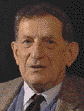

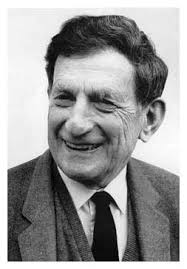
Fragmentation of thought, overspecialisation ... Are we aware? and then? Deadliest poison in town!!

A theme that is also dear to Buckminster Fuller - though maybe coming from a different perspective - though may be not... ;-) It is not indifferent that both Bohm and Buckminster come from the world of Science and both talk about higher level of conscienceness and the collective implication of raising to these... the individual is limited in scope and power, but the scope and power of what individuals can achieve together is de-multiplied when collaborative strategies are unveiled, unfolded and put into practice...

About fragmentation of thought: P359 - The Fifth Discipline Filedbook - Team Learning
"The theory of dialogue suggests that breakdown in the effectiveness of teams and organisations are reflective of a broader crisis in the nature of how human beings perceive the world. As a natural mechanism to develop meaning, people learn to divide the world into categories and distinctions into our thoughts. We then tend to become almost hypnotized by these distinctions, forgetting that we created them. "The economy is falling apart," or "The people are corrupt," becomes our reality, with a seemingly independent power over us.

... As Bohm has suggested, fragmentation of thought is like a virus that has infected every field of human endeavor. Specialists in most fields cannot talk accross specialties. Marketing sees production as the problem. Managers are told to "think", while workers are told to "act". Instead of reasoning  together, people defend their "part", seeking to defeat others. If fragmentation is a condition of our times, then dialogue is one tentatively proven strategy for stepping back from the way of thinking which fragmentation produces."

Exploring thoughts and dialogue with David Bohm


David Bohm's approach is meaningful to Peter Senge's theory of dialogue - in the section concerning team learning of the Fifth Discipline Fieldbook. As stated p359 of the Fieldbook: "As Bohm conceived it, dialogue would kindle a new mode of paying attention, to perceive - as they arose in conversation - the assumptions taken for granted, the polarization of opinions, the rules for acceptable and unacceptable conversation...the group would have to learn to watch or experience its own tacit process in action. Dialogue's purpose, as we now understand it, would create a setting where conscious collective mindfulness  could be maintained." (inspired by Unfolding Meaning by David Bohm 1985)

David Bohm - on Meaning, Purpose and Exploration in Dialogue
(Extracted from a webpage - see below - where it had been edited with permission from tapes of an August, 1990 conversation)

Communication has been ailing in the human race for a long time and Dialogue is concerned with that. But the primary purpose of Dialogue is not to communicate. It is much deeper. It addresses the blocks in communication, not merely to understand them, but to meet them directly. It is aimed at seeing resistances to communication. In Dialogue we are ready to raise topics serious enough to cause trouble. But while we are talking we are interested in being aware of what's going on inside us and between us.
The word "dialogue" has many meanings and we are giving it a particular meaning. In this Dialogue we are not trying to make our points prevail or, if we are, we need to look at that. Our challenge is to see when each of us is trying to prevail, because if anybody prevails it means the dialogue has failed. Or, if we simply agree, the dialogue may also have failed because this means that we haven't gone deeply enough into the process or into the consciousness behind it. What begins to transform culture into something quite different is that ultimately the frustration or anger or rage or hatred that arises can lead to a crisis in which these feelings are transformed giving rise to impersonal fellowship - to thinking together and participating as if we were one body - by establishing a common consciousness. The group then becomes a kind of instrument of consciousness which can function differently.
It is essential to state the theory that this is what is possible. What I am saying is that a particular kind of dialogue is needed. But, as we talk together the question of what, if anything, its purpose is keeps arising. Sometimes we say that it should not have a purpose and sometimes we seem to say that it should. If we restrict the purpose too much it is clear we are going to be in trouble. None of the purposes is fixed because we find that as we go further into it the purpose begins to change; we discover a new purpose, and so on. So really, when we set a purpose, we set it only as a beginning, as a point of departure, not as a purpose we hold to. This is the crucial point. We may at any moment have to have a purpose, but we are not holding to that purpose. Purpose flows out of significance and value and that's what we're exploring. We expect that meaning is going to change through our learning as we go along and therefore purpose changes naturally.
In Dialogue or in our own meditation, or whatever, the attitude is one of exploration and emptiness - that is, not having fixed assumptions but rather an empty space where there is the possibility of exploring all sorts of things. This is a proposal for exploration. But even this is not final. It too has to be constantly open to exploration - seeing whether the proposal, as made, is coherent. In other words, we're not even saying exploration is the answer. The purpose is constantly changing and flowing out of the meaning.
But we can't give the meaning in a nutshell. If everybody knew the meaning, we wouldn't need the Dialogue. The dialogue is not aimed at settling anything. We explore meaning together - the creative perception of meaning - thinking together and feeling together. But meaning is active. It is not merely sitting there. The consideration of this meaning may act - or it may not. The whole point of having the Dialogue is that we're not trying to produce a result. That's very important. It may never do it. Or it may do it at some moment when we least expect it. The seed has been planted. And the meaning is naturally, spontaneously active and transformative.

http://www.david-bohm.net/dialogue/dialogue_exploration.html
Copyright © 1990 by Sarah Bohm
Use only with prior permission.

Thursday, January 14, 2010

Some competencies for Learning Organisations

•Some Core Competencies
–Personal Mastery
–Focusing on Mission & Vision
–Solving Problems
–Creating and Innovating
–Unleashing People Potential
–Performing as a team
–Using Heart skills
–Relationship Building
–Building partnerships

Inspiring quotes on Simplicity


‘Understanding evolves through three phases : simplistic, complex and profoundly simple’


simplicity 

William Schutz, Profound Simplicity

‘It is very difficult to teach things that are obvious (and hence difficult to learn that which is simple) because the mind takes it for granted and wants to move on to something complicated which is presumed to be more valuable.
Because we understand something, we believe we practice it. Attention to the obvious (the simple), a deliberate effort to use that which is obvious can be effective’
Edward de Bono, The Happiness Purpose

‘Small changes can bring forth great  results but these points of leverage are the least obvious’
Peter Senge, The Fifth Discipline

‘What is essential is invisible to the eye. It requires the heart to see it. ‘The gap between knowing and doing is the gap between the mind and the body.

What connects the mind and the body is the heart, the breath. Therefore, the heart of the problem is the problem of the heart’

‘The skilful are not obvious. They appear simpleminded. They know the larger patterns. To know the patterns is the subtle power’
David R. Hawkins, M.D., Ph.D

‘We are so busy trying to prove that we are okay that we forget we are magnificent’
Gay Hendricks

‘Reality is always kinder than the stories we make about it’
Byron Katie, Loving What Is


Less is More and More is Less. Slowing down can enable us to speed up. Learn to see things upside down, backside front, inside out. Embrace paradoxes. 

‘Appreciation allows depth, texture, dimension to life. Without appreciation, the world is flat. No fizz, no sparkle, no passion. To appreciate is to give life, to bestow being. Appreciation fosters connection and partnership’
Ron Bynum

Life comforts the disturbed, and disturbs the comfortable. The willingness to step out of the comfort zone simplifies life.

Learn to see how the rules of the game are shifting rapidly .. from the industrial age to  the network age. The shift from Force to Power, from hierarchical organisations to hyper-linked ecologies, from the work ethic to the play ethic, from linear, sequential approaches to non-linear, quantum realities.
Learn to see. And see to learn.
The mantra is ‘Observe. Observe.Observe’

collected by Kiran Gulrajani - writen by Kiran as well when no other mention is made

Driving Simplicity

The following work on the theme of Simplicity is the result of a co-creation between Kiran Gulrajani and myself. How to evolve your organisation from a culture of processes, initiatives, internal competition to an approach to things driven by SIMPLICITY. How to simplify?

Cultural Attribute: ENTREPRENEURIAL
Simplifier: EMBRACE PARADOXES
Slowing down can enable us to speed up

Cultural Attribute: ENTREPRENEURIAL
Simplifier: APPRECIATE THE NEW WORLD
Shift from Enforce to Empower

Cultural Attribute: PASSIONATE
Simplifier: CONTACT THE GREATNESS IN YOURSELF AND OTHERS
Authentically notice and appreciate your and other people’s strengths and contributions

Cultural Attribute: IN TOUCH
Simplifier: CONNECT THRU CONVERSATION
Shift from ‘advocacy’ to ‘enquiry’ by listening from the heart

Wednesday, January 13, 2010

Common sense - Something the world is lacking

As Krugmans puts it - quoting Marvin Minsky " what people vaguely call common sense is actually more intricate than most of the technical expertise we admire." And Krugman adds: "it takes common sense to deal with the physical world - which is why , even at the end of the XX century, there are still no robot plumbers."

Followers